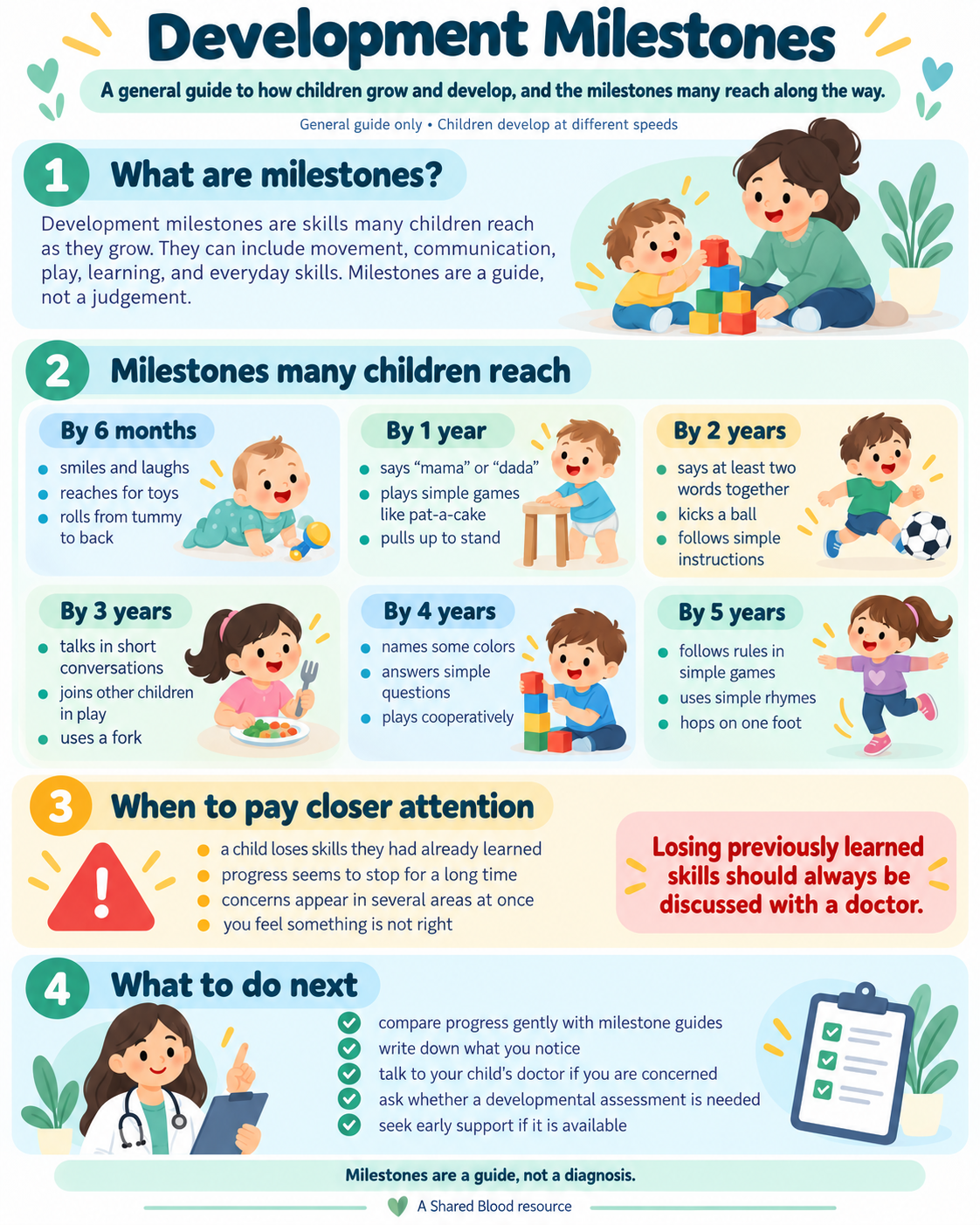
Development milestones are skills many children reach as they grow. They include movement, communication, play, learning and everyday skills. Children develop at different speeds, so milestones are a guide, not a judgement.
Milestones many children reach
By 6 months: smiles and laughs, reaches for toys, rolls from tummy to back
By 1 year: says “mama” or “dada”, plays simple games like pat-a-cake, pulls up to stand
By 2 years: says at least two words together, kicks a ball, follows simple instructions
By 3 years: talks in short conversations, joins other children in play, uses a fork
By 4 years: names some colours, answers simple questions, plays cooperatively
By 5 years: follows rules in simple games, uses simple rhymes, hops on one foot
When to pay closer attention
Losing previously learned skills should always be discussed with a doctor.
A child loses skills they had already learned
Progress seems to stop for a long time
Concerns appear in several areas at once
You feel something is not right
Practical guidance
Compare progress gently with milestone guides
Write down what you notice
Talk to your child’s doctor if you are concerned
Ask whether a developmental assessment is needed
Seek early support if it is available
Key takeaways
Every child develops at their own pace
Milestones are a guide, not a diagnosis
Losing a learned skill is always worth raising with a doctor
Related resources
Child DevelopmentInfographic
Recognising Developmental Delays
How to notice when a child may need extra developmental support, and where to turn.
A guide to the four inherited conditions covered on Shared Blood: what each one is, the signs to look for, and how to support your child at home and at school.