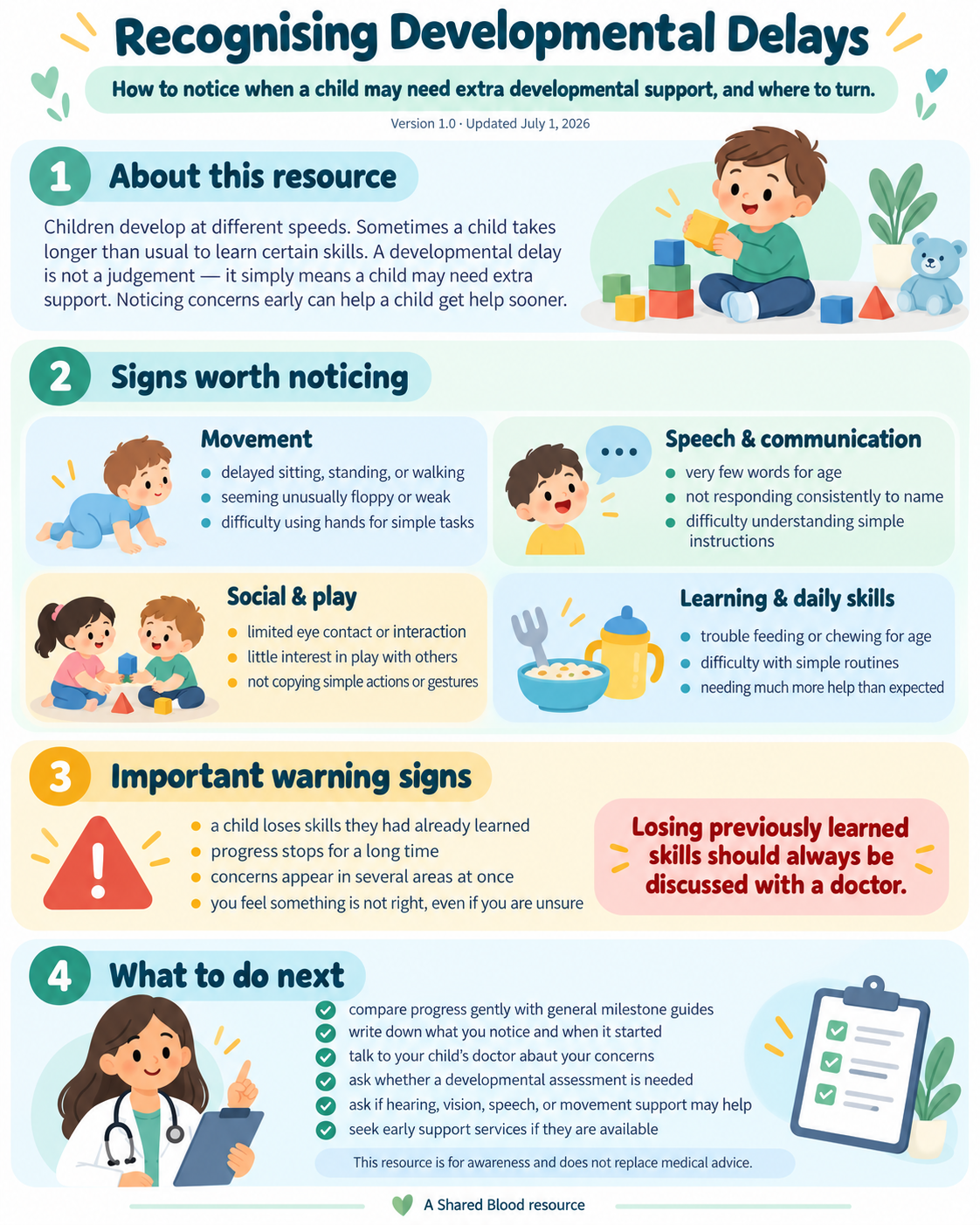
Children develop at different speeds, and sometimes a child takes longer than usual to learn certain skills. A developmental delay is not a judgement; it simply means a child may need extra support. Noticing concerns early can help a child get help sooner.
Signs worth noticing
Movement: delayed sitting, standing or walking; seeming unusually floppy or weak; difficulty using hands for simple tasks
Speech and communication: very few words for age; not responding consistently to their name; difficulty understanding simple instructions
Social and play: limited eye contact or interaction; little interest in playing with others; not copying simple actions or gestures
Learning and daily skills: trouble feeding or chewing for age; difficulty with simple routines; needing much more help than expected
Important warning signs
Losing previously learned skills should always be discussed with a doctor.
A child loses skills they had already learned
Progress stops for a long time
Concerns appear in several areas at once
You feel something is not right, even if you are unsure
Practical guidance
Compare progress gently with general milestone guides
Write down what you notice and when it started
Talk to your child’s doctor about your concerns
Ask whether a developmental assessment is needed
Ask if hearing, vision, speech or movement support may help
Seek early support services if they are available
Key takeaways
Early support often makes the biggest difference
A delay means a child may need extra help, not blame
This resource is for awareness and does not replace medical advice
Related resources
Child DevelopmentInfographic
Development Milestones
A general guide to how children grow and develop, and the milestones many reach along the way.