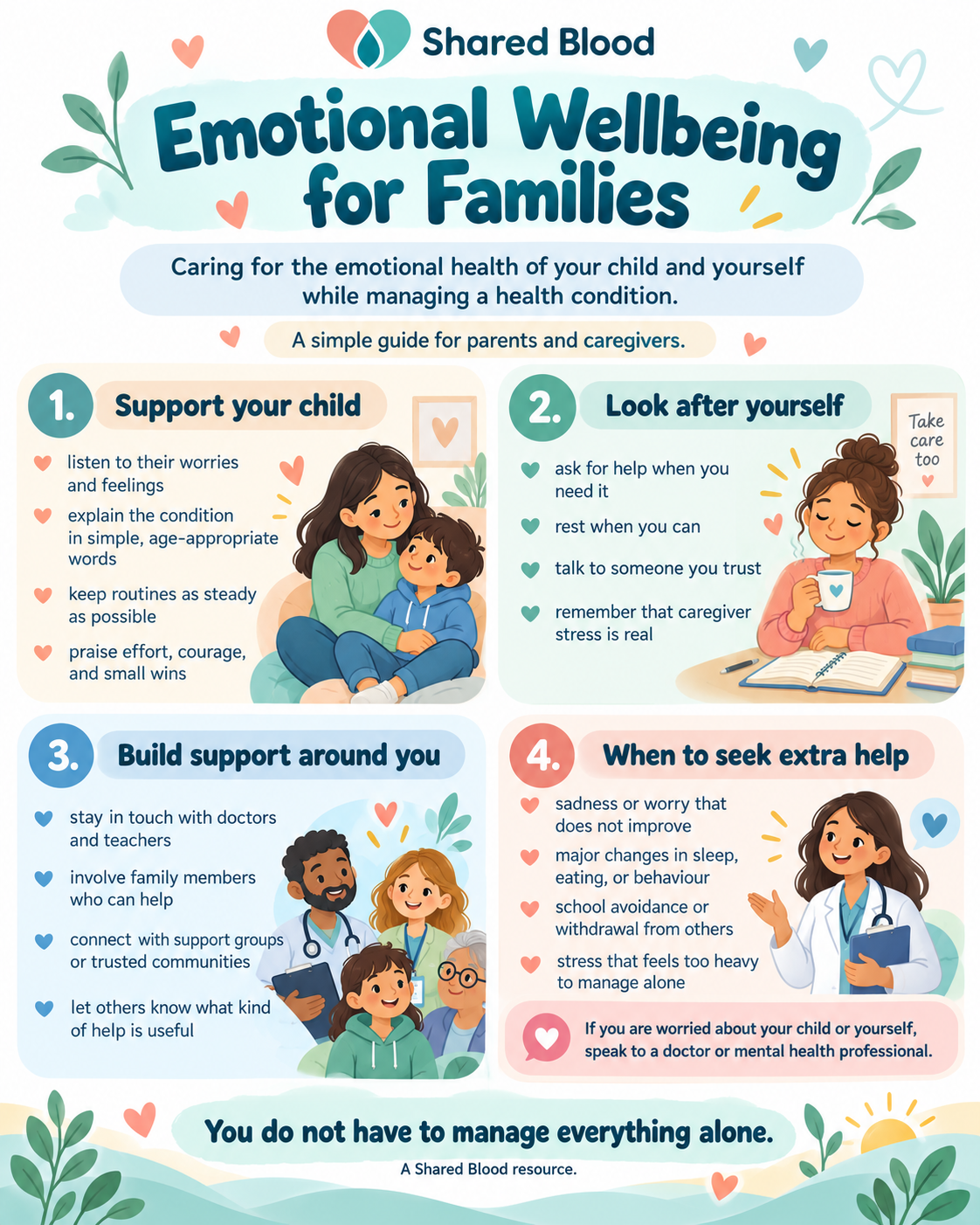
Explain the condition in simple, age-appropriate words
Keep routines as steady as possible
Praise effort, courage and small wins
Look after yourself
Ask for help when you need it
Rest when you can
Talk to someone you trust
Remember that caregiver stress is real
Build support around you
Stay in touch with doctors and teachers
Involve family members who can help
Connect with support groups or trusted communities
Let others know what kind of help is useful
When to seek extra help
If you are worried about your child or yourself, speak to a doctor or mental health professional.
Sadness or worry that does not improve
Major changes in sleep, eating or behaviour
School avoidance or withdrawal from others
Stress that feels too heavy to manage alone
Key takeaways
Emotional health matters as much as physical health
Caring for yourself helps you care for your child
You do not have to manage everything alone
Related resources
Caring for Your ChildPDF
Caregiver Learning Booklet
A guide to the four inherited conditions covered on Shared Blood: what each one is, the signs to look for, and how to support your child at home and at school.